
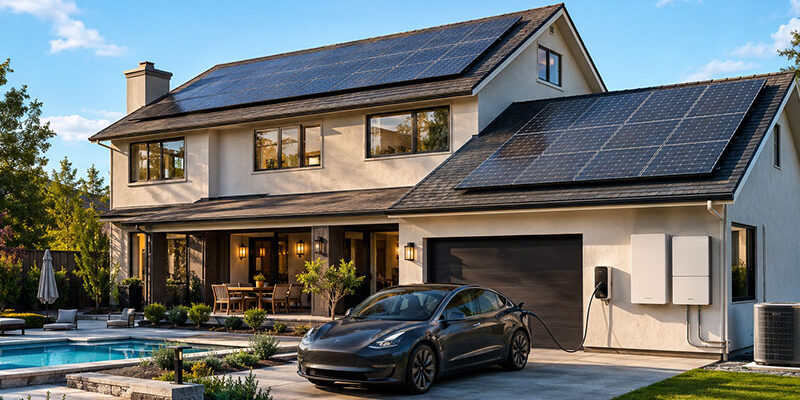
Future-Proofing Your Home: When It’s Time to Expand Your Solar System for EVs, Pools, and AC Upgrades
We hear this from Sacramento-area homeowners all the time: “I already have solar, so why is my electricity bill creeping back up?” If that sounds familiar, you’re not imagining it, and you’re definitely not alone.
When we first designed your system, we sized it around how your home used electricity at that time. But homes change. Maybe you’ve added an electric vehicle to the driveway, put in a pool, upgraded your air conditioning, or started working from home full time. Each of those is a great improvement to your life, and each one also asks more of your electrical system than it was originally built to handle.
If your utility bills are climbing despite already having solar, it might be time to talk with us about a solar system expansion.
How Your Home’s Energy Needs Change Over Time
When we design a solar system, we size it around your household’s electricity usage at the time of installation. That works well on day one, but very few homes stay exactly the same for years afterward. The U.S. Department of Energy notes that smart planning and upgraded equipment can improve efficiency, but bigger lifestyle changes and new appliances can still push your total energy demand higher than expected.
Electric Vehicle Charging
One of the biggest changes we see is a new electric vehicle in the garage. EVs are fantastic for cutting fuel costs, but they also add a substantial amount of electricity use to your home, sometimes thousands of kilowatt-hours a year depending on how much you drive and how often you charge.
A Level 2 charger makes home charging far more convenient, but it also increases your electrical demand significantly. If your solar system was sized before an EV was part of the picture, it may not be producing enough to cover both your home and your car.
If you’re EV-curious or already charging at home, we’d recommend an evaluation to find out whether your current system can keep up, how much additional capacity you might need, whether battery storage would help, and if any electrical upgrades are needed for a charger installation. For more on this, take a look at our article on solar-powered EVs in California. The U.S. Department of Energy’s Alternative Fuels Data Center also has useful background on home charging levels.
Swimming Pools and Pool Equipment
Pools are a welcome escape during Sacramento’s hot summers, but pumps, filtration systems, lighting, and pool heaters all draw electricity. Even efficient pool equipment can add up quickly, especially during peak summer months when your pool and your air conditioner are competing for the same solar production.
Air Conditioning Upgrades
California summers ask a lot of HVAC systems, and many homeowners eventually upgrade for better comfort and efficiency. Newer systems tend to run more efficiently, but a larger home, more living space, or simply wanting it cooler can still mean higher electricity use overall, particularly when you’re running AC for hours during triple-digit days.
Home Electrification and Remote Work
Today’s homes use more electricity than ever. Home offices, heat pump water heaters, induction cooktops, workshop tools, and more devices around the house all add to your usage. The ENERGY STAR home upgrade guide has good tips on efficiency, but as homes become more electrified, we often find that a system installed a few years ago just isn’t built for how the home runs today.
Signs Your Solar System May Be Undersized
Your utility bill is usually the first clue that your system isn’t keeping pace with your home. Here’s what we’d watch for:
- Increasing utility bills despite having solar
- Larger annual true-up bills
- Greater dependence on grid electricity during summer months
- Increased evening electricity purchases
- Significant energy use from EV charging
- Reduced overall energy offset percentages
None of these signs mean something is wrong with your solar system. They usually just mean your household has grown past its original design.
Recognize a few of these on your own bill? Let’s take a look together. Contact our team for a free evaluation, and we’ll tell you exactly where your system stands.
What Is a Solar System Expansion?
A solar expansion means increasing the capacity of your existing system to match how your home uses electricity today. Depending on your situation, that could mean additional panels, battery storage, inverter upgrades, electrical improvements, or EV charger integration. Take a look at our solar products and solar services to see what’s available.
Adding Additional Solar Panels
The most direct route is usually adding more panels. Extra capacity can offset the added load from EV charging, pool equipment, air conditioning, and other high-demand appliances.
Upgrading Existing Equipment
Some older systems benefit from an inverter upgrade or other electrical improvements that let the system run more efficiently and handle additional production.
Adding Battery Storage
Battery storage has become especially important for California homeowners under NEM 3.0. By storing your excess daytime production, a battery lets you use more of your own energy in the evening, when utility rates are often at their highest. If you’re comparing options, our Enphase IQ Battery comparison is a good place to start.
Electrical Panel and EV Charger Upgrades
In some cases, an expansion also means upgrading your electrical panel or adding a dedicated EV charger circuit so your system can safely support the added demand, especially if you want to charge your car with solar power.
The NEM 3.0 Factor: Why Batteries Matter More Than Ever
California’s NEM 3.0 program changed how homeowners are credited for excess solar sent back to the grid. Exporting power generally pays less than it used to, so we’re seeing more homeowners focus on using more of their own energy instead of selling it back.
A battery is central to that strategy. Instead of sending your extra daytime production to the grid, you can store it for evening hours, peak rate periods, outages, or whenever your household demand spikes. If you’re adding EV charging, a pool, or more cooling load, a battery can make a real difference in how much an expansion actually saves you. We go into more detail in Sacramento Solar in 2026: Why You Need a Battery Under NEM 3.0.
Can Any Solar System Be Expanded?
Most systems can be expanded, but every home is a little different. Here’s what we look at:
Available Roof Space
Adding panels requires enough roof area with good sun exposure.
Existing Equipment Compatibility
Some older systems need modifications or upgrades before they can handle additional production.
Structural Considerations
We always check roof condition and structural capacity before any expansion work begins.
Utility and Permitting Requirements
Every expansion has to meet local building codes, utility requirements, and permitting rules.
Because every home is different, a site evaluation is the best way to find out what’s possible for yours. You can also check our solar FAQ and resources page for more answers.
Are Solar Expansion Projects Eligible for Tax Incentives?
Depending on the scope of your project and current regulations, certain expansion and battery storage projects may qualify for federal tax incentives. We’d recommend checking with a qualified tax professional about your specific situation. You can also visit our Solar Tax Incentives page or review the IRS information on the Residential Clean Energy Credit.
Planning for the Future
One of the best things about solar is how well it can grow with you. Whether you’re getting your first EV, putting in a pool, upgrading your AC, or just using more electricity than you did a few years ago, your system should keep up with your life, not hold it back.
If your energy needs have changed since your system went in, now’s a good time to find out where you stand. We help Sacramento-area homeowners review their current usage, find room for more solar production, and put together an expansion plan that actually fits how they live today, from added panels and battery storage to EV charger installation.
Ready to see what’s possible for your home? Visit our Solar Services page or contact us today. We’d love to help.